Chinese by Topic
Family Chinese — Kinship Terms, Relatives & Relationships
Chinese has one of the most detailed kinship systems in any language. Unlike English, where “uncle” covers all parents’ brothers, Chinese distinguishes paternal from maternal, older from younger, and blood from in-law — with a unique word for each.
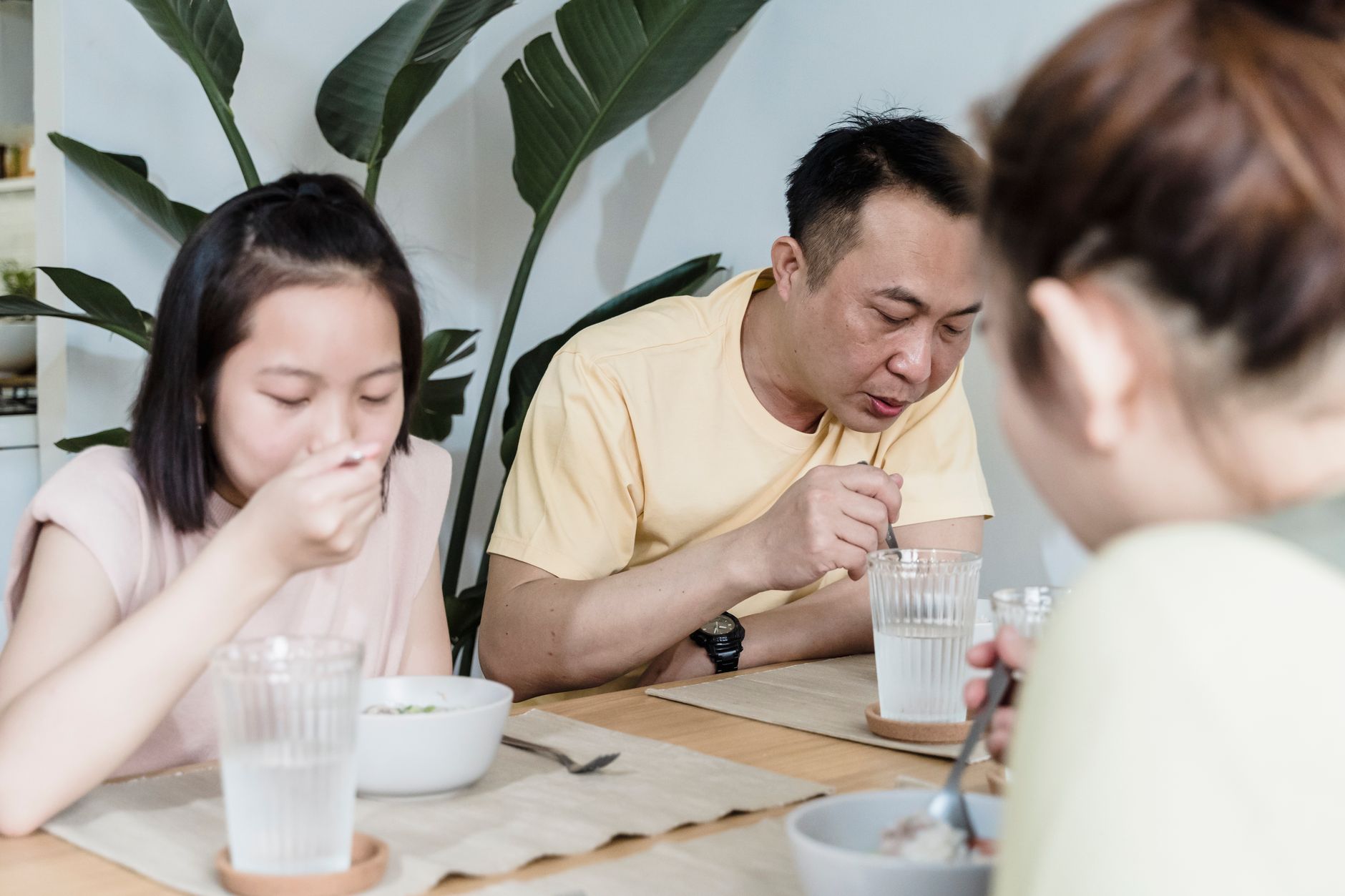
Immediate Family (家人 jiārén)
The core family unit. Note that Chinese distinguishes older siblings from younger siblings — there is no single word for “brother” or “sister” without specifying relative age.
| Hanzi | Pinyin | English | Notes |
|---|---|---|---|
| 爸爸 | bàba | father / dad | Informal; formal: 父亲 fùqīn |
| 妈妈 | māma | mother / mum | Informal; formal: 母亲 mǔqīn |
| 哥哥 | gēge | older brother | |
| 姐姐 | jiějie | older sister | |
| 弟弟 | dìdi | younger brother | |
| 妹妹 | mèimei | younger sister | |
| 儿子 | érzi | son | |
| 女儿 | nǚ'ér | daughter | |
| 丈夫 | zhàngfu | husband | Informal: 老公 lǎogōng |
| 妻子 | qīzi | wife | Informal: 老婆 lǎopo |
Paternal Relatives (父亲那边 fùqīn nà biān)
Relatives on your father’s side use a completely different set of terms from the maternal side. Even “uncle” splits into two words: 伯伯 (bóbo) for father’s older brother and 叔叔 (shūshu) for father’s younger brother. Cousins on the paternal side share your surname and are called 堂 (táng) cousins.
| Hanzi | Pinyin | English | Notes |
|---|---|---|---|
| 爷爷 | yéye | paternal grandfather | Father's father |
| 奶奶 | nǎinai | paternal grandmother | Father's mother |
| 伯伯 | bóbo | father's older brother (uncle) | Also: 伯父 bófù |
| 叔叔 | shūshu | father's younger brother (uncle) | |
| 姑姑 | gūgu | father's sister (aunt) | Also: 姑妈 gūmā |
| 堂兄弟 | táng xiōngdì | paternal male cousins | Same surname cousins |
| 堂姐妹 | táng jiěmèi | paternal female cousins | Same surname cousins |
Maternal Relatives (母亲那边 mǔqīn nà biān)
The character 外 (wài, meaning “outside”) appears in many maternal-side terms — 外公, 外婆, 外孙 — reflecting the traditional view that married daughters “belong to” their husband’s family. Cousins on the maternal side have a different surname and are called 表 (biǎo) cousins.
| Hanzi | Pinyin | English | Notes |
|---|---|---|---|
| 外公 | wàigōng | maternal grandfather | Mother's father |
| 外婆 | wàipó | maternal grandmother | Mother's mother |
| 舅舅 | jiùjiu | mother's brother (uncle) | |
| 阿姨 | āyí | mother's sister (aunt) | Also used for any woman of mother's age |
| 表兄弟 | biǎo xiōngdì | maternal male cousins | Different surname cousins |
| 表姐妹 | biǎo jiěmèi | maternal female cousins | Different surname cousins |
In-Laws & Extended Family
In-law terms differ depending on whether you are the husband or the wife. A wife calls her husband’s parents 公公 and 婆婆, while a husband calls his wife’s parents 岳父 and 岳母. Grandchildren are also distinguished by whether they come through a son (孙) or a daughter (外孙).
| Hanzi | Pinyin | English | Notes |
|---|---|---|---|
| 公公 | gōnggong | husband's father (father-in-law) | Used by wife |
| 婆婆 | pópo | husband's mother (mother-in-law) | Used by wife |
| 岳父 | yuèfù | wife's father (father-in-law) | Used by husband |
| 岳母 | yuèmǔ | wife's mother (mother-in-law) | Used by husband |
| 女婿 | nǚxu | son-in-law | |
| 儿媳妇 | érxífù | daughter-in-law | |
| 孙子 | sūnzi | grandson (son's son) | |
| 孙女 | sūnnǚ | granddaughter (son's daughter) | |
| 外孙 | wàisūn | grandson (daughter's son) | |
| 外孙女 | wàisūnnǚ | granddaughter (daughter's daughter) |
Family Conversation Phrases
Asking about someone’s family is a common conversation starter in Chinese. The measure word for family members is 口 (kǒu, literally “mouth”), used specifically when counting people in a household.
你家有几口人?
Nǐ jiā yǒu jǐ kǒu rén?
How many people are in your family?
我家有四口人。
Wǒ jiā yǒu sì kǒu rén.
There are four people in my family.
你有兄弟姐妹吗?
Nǐ yǒu xiōngdì jiěmèi ma?
Do you have siblings?
我是独生子(独生女)。
Wǒ shì dúshēngzǐ (dúshēngnǚ).
I am an only child (son / daughter).
你结婚了吗?
Nǐ jiéhūn le ma?
Are you married?
我还没结婚。
Wǒ hái méi jiéhūn.
I'm not married yet.
你有孩子吗?
Nǐ yǒu háizi ma?
Do you have children?
我有一个儿子和一个女儿。
Wǒ yǒu yī gè érzi hé yī gè nǚ'ér.
I have one son and one daughter.
你爸爸做什么工作?
Nǐ bàba zuò shénme gōngzuò?
What does your father do for work?
这是我的家人。
Zhè shì wǒ de jiārén.
This is my family.
我很想家。
Wǒ hěn xiǎng jiā.
I really miss home / I'm homesick.
他们住在一起。
Tāmen zhù zài yīqǐ.
They live together.
我爷爷奶奶身体很好。
Wǒ yéye nǎinai shēntǐ hěn hǎo.
My grandparents (paternal) are in good health.
Cultural Context: Family in Chinese Society
- Filial piety (孝 xiào) is one of the most important values in Chinese culture. Respect for parents and elders is not optional — it is a moral duty deeply embedded in Confucian ethics. Adult children are expected to care for ageing parents, and disobedience to parents is seen as a serious character flaw.
- Chinese names place the family name (姓 xìng) first. For example, in 李明 (Lǐ Míng), 李 is the surname and 明 is the given name. There are about 100 common Chinese surnames, and the most frequent — 王 (Wáng), 李 (Lǐ), 张 (Zhāng) — are each shared by tens of millions of people.
- Generational names (辈分 bèifèn) are traditional: siblings and cousins of the same generation share a character in their given names. For instance, three brothers might be named 建国, 建军, 建华 — all sharing 建 (jiàn). This practice is declining in modern China but still exists in many families.
- Chinese distinguishes between relatives with extraordinary precision because historically, inheritance, mourning obligations, and social duties differed depending on the exact relationship. A 伯伯 (father's older brother) held more authority than a 叔叔 (father's younger brother) in traditional family hierarchy.
- The term 家 (jiā) means both 'family' and 'home' — reflecting how deeply intertwined these concepts are in Chinese culture. Multi-generational households were the norm for centuries, and while nuclear families are now more common in cities, grandparents helping raise grandchildren remains widespread.
The Generational Language Shift — Does This Sound Familiar?
In Singapore, Malaysia, and across the Chinese diaspora, the language story of a family often follows the same arc:
Generation 1 — 祖父母 Grandparents
Speaks only dialect — Cantonese, Hokkien, Teochew, Hakka. May know some written Chinese from school in China or from Chinese-medium schooling before it was phased out. Refers to you using the correct kinship terms without thinking.
Generation 2 — 父母 Parents
Speaks dialect at home with their parents, Mandarin from school, English at work. The bridge generation — they can often translate between your grandparents and the outside world. Their Mandarin may be formal (textbook) while their dialect is fluent and natural.
Generation 3 — 你 You
Grew up in English. Understand the family dialect but cannot always speak it back fluently. Attended Chinese lessons in school but the curriculum felt disconnected from home. Now you want to connect the dots.
This is exactly who this site is built for. You are not a beginner — you have years of listening input, family vocabulary, and emotional connection to the language. You just need to unlock the reading and writing side.
Dialect Family Terms You Already Know
Many of the Mandarin kinship terms on this page will look instantly familiar — because the characters are the same across dialects. Only the pronunciation differs. Here is how key terms compare across Cantonese and Hokkien:
| Hanzi | Mandarin Pinyin | Cantonese | Hokkien |
|---|---|---|---|
| 爸爸 | bàba | baa1 baa1 | pah / peh |
| 妈妈 | māma | maa1 maa1 | má / bú |
| 哥哥 | gēge | go1 go1 | ko |
| 姐姐 | jiějie | ze2 ze2 | ché |
| 弟弟 | dìdi | dai6 dai6 | tī |
| 妹妹 | mèimei | mui6 mui6 | muē |
| 爷爷 | yéye | ye4 ye4 | a-kong |
| 奶奶 | nǎinai | naai5 naai5 | a-má |
| 外公 | wàigōng | ngoi6 gung1 | gōng |
| 外婆 | wàipó | ngoi6 po4 | a-má (mat.) |
Notice how the characters are almost always identical — it is only the pronunciation that diverges. This is your biggest advantage as a heritage learner: the written form already belongs to you.
Related lessons